Chapter Update: Meet the Judges
April 14, 2026
One of the most enduring mysteries for law students and young lawyers alike is judges. In law school, judges are just names in a textbook; on television, they are often portrayed as sharp-tongued and impatient. In reality, these lawyers—robed in black and addressed as “Your Honor”—sit at the pinnacle of the legal profession, vested with extraordinary authority. Their rulings can determine matters of personal liberty in criminal cases and financial survival in civil ones. It’s no wonder they are both revered and feared.
Fortunately for those studying or practicing in the Middle District of Pennsylvania, the Judges of the Middle District—all longtime practitioners themselves—have not lost sight of how daunting the bench can appear from counsel table. They are willing and, indeed, eager to remain accessible, approachable, and engaged with the bar, and to work with our Chapter to make that accessibility meaningful, most notably through participating in the Chapter’s annual Meet the Judges panel and mixer. Through this event, which has been held since 2022, attendees have the opportunity to look behind the curtain and gain insight into what it takes to become—and to be—a judge.
This year, eight distinguished members of the bench showed up to Courtroom 7A at the Sylvia H. Rambo United States Courthouse to share their journeys to the bench and their experiences on it. The panel consisted of District Judges Jennifer P. Wilson, Karoline Mehalchick, Keli M. Neary, Yvette Kane, and Malachy Mannion, as well as Chief Magistrate Judge Daryl F. Bloom and Magistrate Judges Philip J. Caraballo and Sean A. Camoni. The panel was moderated by Student Chapter Presidents Kristen Slubowski of Penn State Dickinson Law and Kaylee Caprari of Widener Commonwealth Law.
The Judges have varied backgrounds: five clerked for state or federal judges, four were Assistant United States Attorneys in the District, two worked for the Pennsylvania Office of Attorney General, and one was a Criminal Justice Act panel attorney working with a small family firm. All, however, desired to become a judge in part to serve the public and tackle complex legal problems. As Judge Mannion, who served as both a District Judge and Magistrate Judge, put it, “It’s so intellectually stimulating. Every day you’re learning something new. If you think you know it all, you don’t.” Judge Kane also noted that the federal bench is one of the few places left where a lawyer can truly remain a generalist.
The process to become a federal judge is demanding, requiring grit, determination, and encouragement. Magistrate judges undergo an application process, interviews with a merit selection panel, and ultimately interviews with the District’s judges. Judge Mehalchick, who—like Judge Mannion—first served as a Magistrate Judge, reflected on her interview experience: “I was with thirteen judges. Judge Kane was to my right and Judge Mannion was to my left, and there was a long table with everyone else around it. And they asked me all sorts of questions about the job.”
For district judges, the process is even more extensive, involving an application, interviews with a committee of attorneys selected by Pennsylvania’s United States Senators, meetings with Senate staff and the Senators themselves, interviews with White House staff, a presidential nomination, testimony before the Senate Judiciary Committee, and confirmation by the Senate. Even following a successful vote, and lest we forget the plight of William Marbury, the tentative judge must receive a signed commission from the President of the United States to take their seat.
Once on the bench, judges preside over countless cases and gain a front-row seat to both the best and worst of the legal profession. Addressing common mistakes, Judge Kane emphasized that success in the courtroom is not about theatrics: “So many people think being a good trial lawyer means being a powerful speaker and a great actor, but it really is just grinding it out, doing the work, and being prepared. We see so many lawyers who just can’t answer the most basic questions about their case.” Judge Mannion reinforced this point: “If you come into a courtroom as a trial lawyer, you should know the case better than anyone—even the people who lived it.” On legal writing, Judge Caraballo cautioned attendees about overreliance on artificial intelligence: “At the end of the day, it’s not generative AI’s name that’s going on the brief—it’s yours.”
The role of a judge also carries significant weight and responsibility. Judges often encounter cases involving sympathetic parties with legitimate injuries but no legal remedy. In such situations, they must issue decisions denying relief— publicly and with finality. On the criminal side, Judges Kane and Mannion both noted that sentencing is among the most difficult aspects of the job.
Even outside the courtroom, judges remain public figures with ongoing obligations. Reflecting on the legacy of Justice Sandra Day O’Connor, Judge Wilson emphasized the importance of civic engagement: “We have very busy jobs—you’ve heard how challenging they are—but I think we have an obligation, and our Chief Justice has said we have an obligation, to give back—not just to the legal community, but to the American public through as much civics education as we can.”
The panel concluded with a candid question-and-answer session, covering topics ranging from how law students can respond to criticisms of the judiciary to ways to become involved in the legal community in Harrisburg. A mixer at the Millworks followed, where judges and attendees connected in a relaxed setting over libations and farm-to-table cuisine.
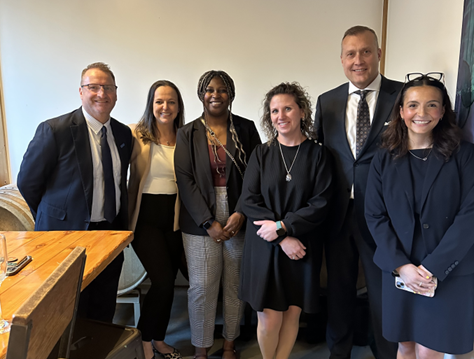
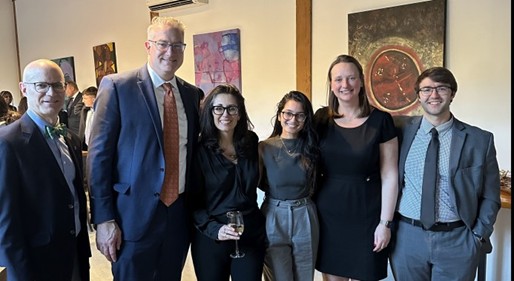
Attendees praised the event, particularly the accessibility of the judges. Widener Commonwealth student Cade Kassay shared that the program offered valuable insight into the realities of judicial decision-making. His classmate Haley Nelson echoed that sentiment, emphasizing how rare it was to engage with judges in a one-on-one setting. “The reception was such a unique and rewarding opportunity,” she said. “Judges were even coming up to me to start conversations—it was a lovely evening.” Penn State Dickinson Law student Aiden Levinson similarly highlighted the value of engaging directly with members of the bench and gaining practical insight into federal practice.
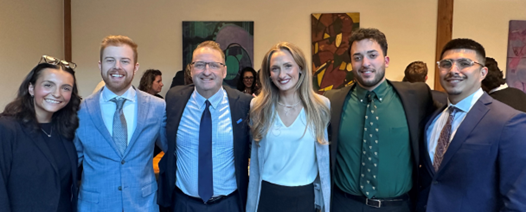
For law students for whom judges are often just names in a textbook, the Middle District bench is anything but. Through events like Meet the Judges, members of the bench step out from behind the formality of the courtroom and into meaningful dialogue with students and practitioners alike. That accessibility not only demystifies the role of a judge but also fosters a stronger, more connected legal community. The Chapter is proud to host this event each year and provide a forum that brings our members and law students into direct conversation with the bench. We look forward to continuing the tradition in the years ahead.
Respectfully,
Jesse N. Zilinski, Newsletter Chair
Middle District of Pennsylvania Chapter
Federal Bar Association
Chapter Update: Membership Mixer
March 24, 2026
Spring was on its way, though not quite in the air on March 18, when the Middle District Chapter of the Federal Bar Association held its first mixer to celebrate the success of its Mentorship Program. Despite the chilly weather outside, warmth filled Ever Grain Brewing Co. in Camp Hill, with plenty of food, fellowship, and fresh networking opportunities for law students and practicing attorneys alike. Open to mentors, mentees, and curious law students eager to get involved, the mixer drew some thirty attendees, underscoring the Program’s success in its inaugural year.
The Chapter’s Mentorship Program is spearheaded by Judge Karoline Mehalchick, the current President of the FBA and a steadfast advocate for mentorship among law students, young attorneys, and more experienced practitioners. “Mentorship is so important to our profession,” Judge Mehalchick says. “It helps law students and younger lawyers navigate questions of ethical concern, employment, and professionalism. For mentor and mentee alike, it fosters the professionalism and civility that is sometimes lacking in the legal world.”
Since its launch last September, the Program has matched 53 pairs of law students and attorneys, with several attorneys mentoring multiple mentees. Pairs are encouraged to meet at least monthly. Addressing the group, Chapter Secretary Ezza Ahmed, who oversees the Program’s logistics, highlighted the number of pairings and level of engagement as evidence of a clear need and strong demand for mentorship opportunities in the Middle District. “This first year has proven just how powerful our connections can be,” Ezza said. “It’s mentorship in the fullest sense, grounded in professionalism, generosity, and integrity.” Ahmed also serves as a consistent resource for participants, sending regular email reminders with helpful tips for building and maintaining effective mentor-mentee relationships.
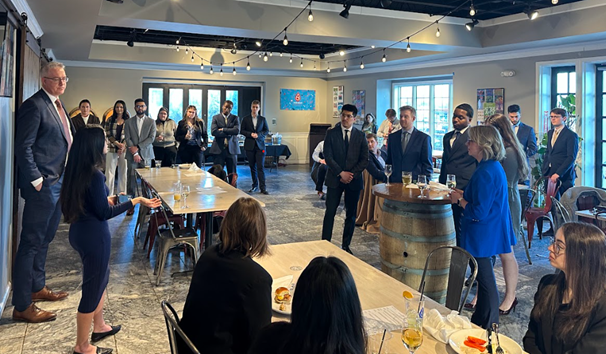
Ezza was followed by Christian Haugsby, an Assistant United States Attorney in the Middle District of Pennsylvania and member of the Board of Directors of the FBA, who stood in for Judge Mehalchick and provided additional remarks on the Program. He lauded the mentees for signing up for a new and untested program. “Getting involved in something in its inaugural year takes a little bit of guts and some trust. I have been to inaugural events that have had fewer people than this in the room. I want to commend you all for doing it and contributing ideas for how it can be made better going forward.” He emphasized the importance of mentorship in his own career, “I stumbled around a little bit when I was a younger attorney, and I think what I didn’t realize is how much I was craving a mentor, craving someone who took an interest in my career. Once I found that, my career launched forward.”
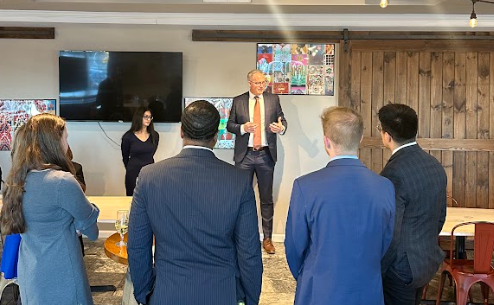
These messages were echoed by attendees of the mixer.
Drew Lemon, a 2L at Penn State Dickinson School of Law, praised his mentor, Thomas Makowski, Corporate Counsel at Verdantas LLC in Wilkes-Barre. “He’s fantastic. The Mentorship Program has provided me with wonderful insights into the legal profession that are not taught or covered in a law school setting.”
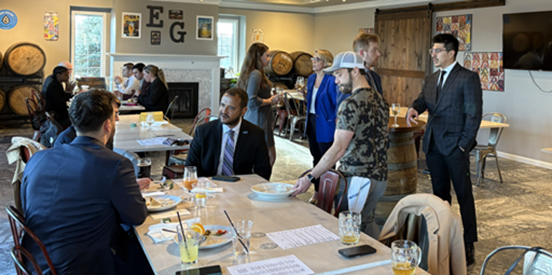
Emily Dreyfus, a 2L at Widener Commonwealth Law School, complimented both the Program, where she is paired with Michael O’Donnell, a personal injury attorney in Kingston and the Immediate Past President of the Chapter—and the mixer itself. “In addition to the advice I’ve gotten from my mentor, the mixer event provided me with the opportunity to meet other practicing attorneys and learn about different opportunities available in the real world.”
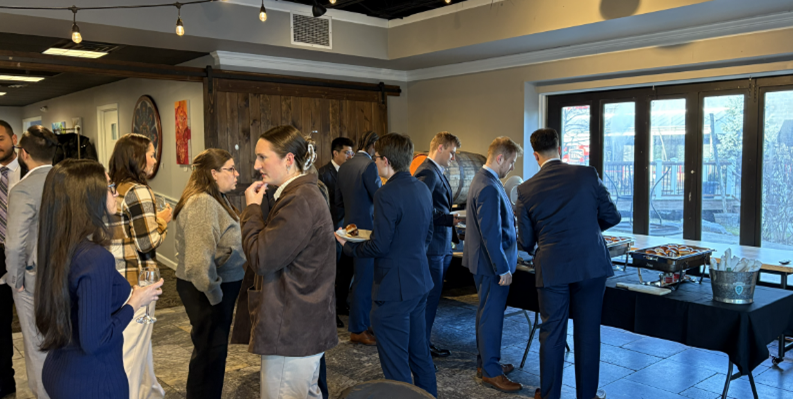
The mixer also had a meaningful impact on attendees who were not mentees as well. Margot Crouch, a 3L in Widener Commonwealth Law School’s evening division, was enthusiastic about both networking and learning more about the Program. “It was a great evening mingling with students and attorneys. I’m not currently in the Mentorship Program, but I’m involved in the FBA. I can’t wait until next year to get a mentor.” Fellow 3L Rishi Nayee echoed that enthusiasm, noting, “This is my first event with the FBA and I was super intrigued to learn about the organization and its initiatives. Our Student Chapter’s President Kaylee was great at advertising this event and I was able to talk with Christian about the great opportunities the FBA provides.”
That Student Chapter President—Kaylee Caprari, a 2L at Widener Commonwealth Law School—is herself paired with Judge Mehalchick. Caprari spoke highly of both the Program and her mentor. “Judge Mehalchick is one of the kindest and most compassionate people,” she said, “each time we meet I learn something new from her, not only from her advice but her demeanor. For someone who is so important and so busy, she is fully present in every meeting. I consider myself very lucky to call her my mentor and to have been able to work alongside her in establishing this Program. It’s been a pleasure and something I’ll never forget.”
Caprari’s reflection underscores a broader truth about the legal profession. While it is an honorable field, it is also one defined by long hours, demanding deadlines, and significant responsibility. Yet, as Judge Mehalchick exemplifies, attorneys can make the time to be present, to guide, and to invest in the next generation.
Even as a young attorney new to private practice myself, I volunteered for the opportunity to mentor an evening division student at Widener Commonwealth Law School. Through the Program, my mentee gains insight that cannot be found in a textbook, and I benefit from the opportunity to reflect on my own development as a lawyer. Even if it is just an email, I find time to check in on my mentee. Like many others, I benefited greatly from mentorship during law school. It is only natural that we pay that forward and continue to grow the Chapter’s Mentorship Program.
We thank Judge Mehalchick, Chapter leadership, and the attendees for making this mixer a success.
Respectfully,
Jesse N. Zilinski, Newsletter Chair
Middle District of Pennsylvania Chapter
Federal Bar Association
President’s Message and a Look Ahead
As we settle into 2026, I am honored to write to you for the first time in my capacity as President of the Middle District of Pennsylvania Chapter of the Federal Bar Association. I am especially pleased to connect with you through what I hope will become a regular and valuable feature in our Chapter communications: the inaugural edition of our blog and digital newsletter.
This message reflects a broader goal for the year ahead—strengthening engagement and communication across our membership. Rather than limiting updates to formal remarks at events or our Annual Meeting each fall, we aim to create a more consistent and accessible way to share what the Chapter is doing, highlight opportunities to get involved, and recognize the outstanding work of our members throughout the District.
In the months ahead, you can expect to hear regularly from me, our Newsletter Chair, Jesse Zilinski, and other members of Chapter leadership about programming, initiatives, and ways to stay connected.
________________________________________________
Building on a Strong Foundation
We enter 2026 on solid footing. I will reiterate what I said during my remarks at our Annual Meeting in October, because I truly believe it and want to celebrate it: the MDPA Chapter reflects the very best of the federal bar—professionalism, collegiality, and a shared commitment to the administration of justice in the Middle District of Pennsylvania. We are also fortunate and deeply grateful to have the steady support of the Judges of our District, all of whom are equally committed to the betterment of the profession and regularly and generously give of their time and expertise in support of the Chapter. That service-oriented spirit, grounded in a shared desire to elevate the practice of law in our District and beyond, continues to define who we are.
Owing in no small part to the leadership of Immediate Past President Michael O’Donnell, the Chapter saw robust programming and meaningful engagement with the bench, bar, and law students during the 2024–2025 term. The Chapter hosted four CLE programs, which ranged from skills-based programming to discussions about the fall of the Chevron doctrine and cutting-edge developments in Second Amendment law, and featured Middle District Judges, local practitioners, and thought leaders from throughout the country. We also hosted several well-attended networking events throughout the District and continued to support the student Chapters at both Harrisburg area law schools, including through participation in the District’s new-for-2025 law student mentorship program.
As we begin a new term, it is my pleasure to introduce the officers who will help lead the Chapter in 2025−2026:
- Sara Myirski, President-Elect
- Sarah Hyser-Staub, Vice President
- Rich Armezzani, Treasurer
- Ezza Ahmed, Secretary
- Michael O’Donnell, National Delegate
I look forward to working alongside this talented group as we build on the Chapter’s momentum and continue strengthening our service to the bench, bar, and broader community.
________________________________________________
A Successful Annual Meeting
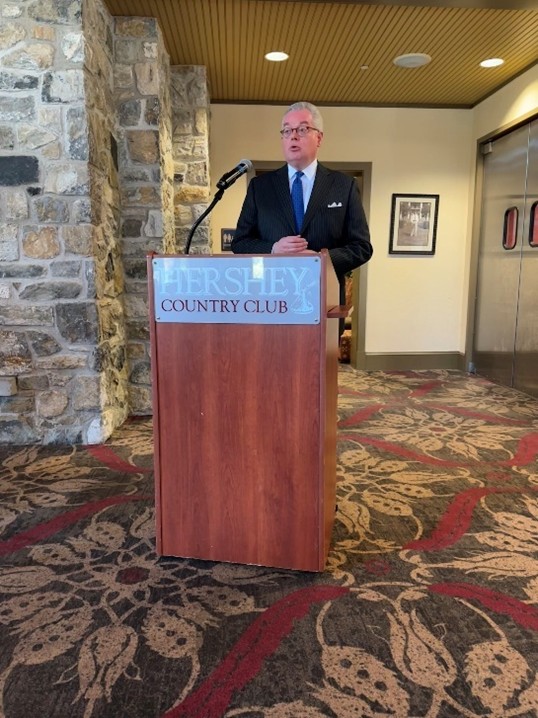
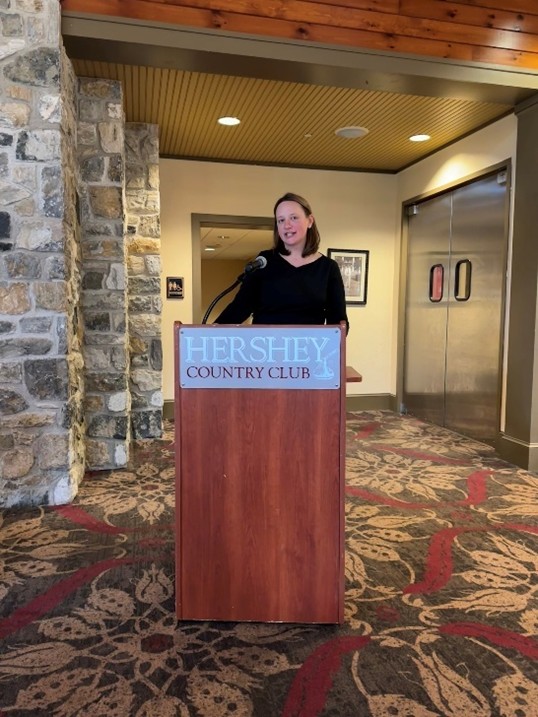
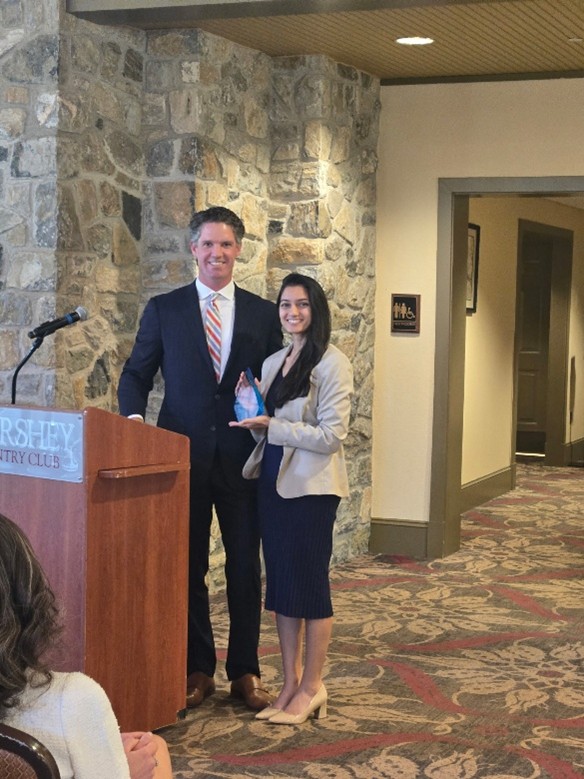
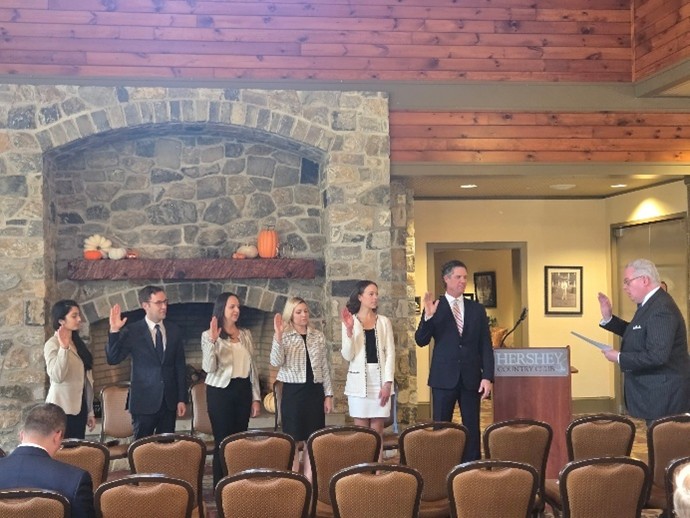
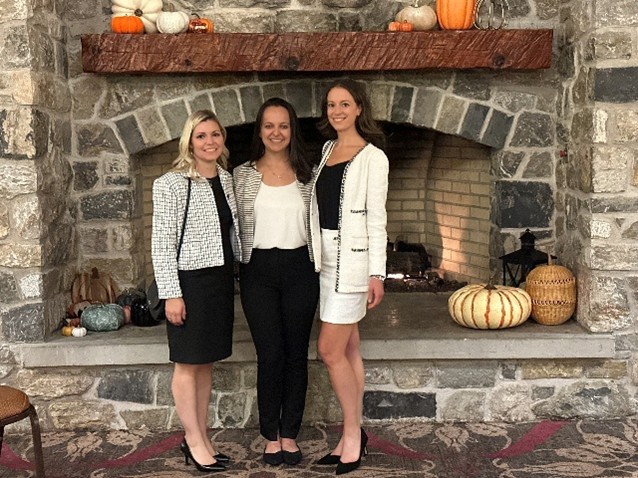
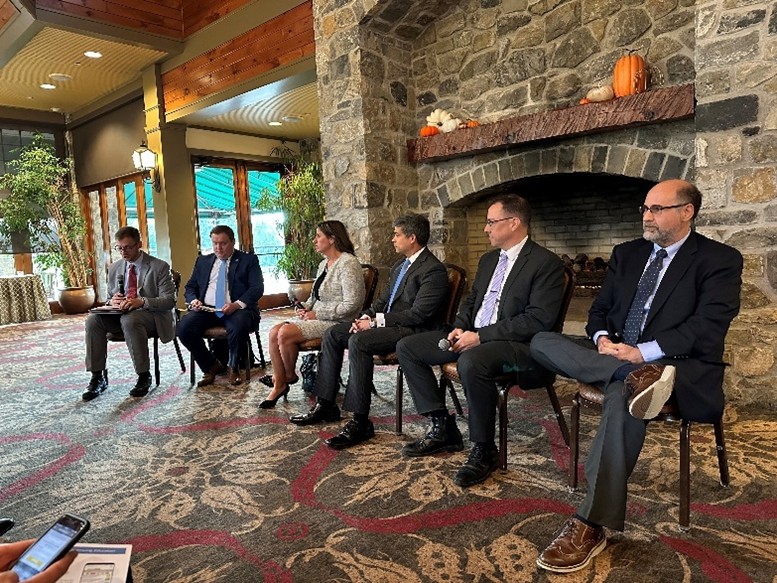
Our Annual Meeting in October was a strong reflection of the collegiality that defines our Chapter. We had a strong turnout of judges, private practitioners, government attorneys, new members of the bar, and law students coming together from across the District. We were honored to hear from both Chief Judge Matthew Brann and Judge Karoline Mehalchick, who is currently serving as President of the Federal Bar Association. The Meeting also featured a CLE program entitled, “A Fireside Chat with the Middle District’s Newest Judges,” during which Judge Keli M. Neary, Magistrate Judge Sean A. Camoni, Magistrate Judge Phillip Caraballo, and Magistrate Judge Leo A. Latella introduced themselves to attendees, shared about their respective journeys to the bench, and discussed the ins-and-outs of practice in their courtrooms. And we were thrilled to present Ezza Ahmed with the 2026 Bridget E. Montgomery Outstanding Service Award.
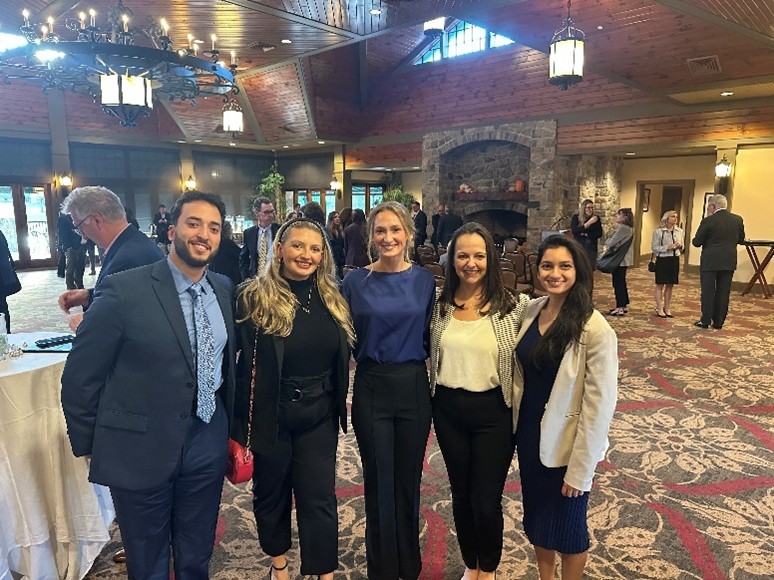
Most importantly, the event offered meaningful opportunities for connection—between the bench and bar, among colleagues across vicinages, and between seasoned practitioners, those new to federal practice, and even a number of law students in attendance. We have included several photographs from the Annual Meeting below to capture some of those moments.
Priorities for 2026
As we look ahead, I am focused on several key priorities for the Chapter:
- Strengthening Member Engagement and Communication. This newsletter is just the beginning. We plan to provide more consistent updates, spotlight member accomplishments, and create clear pathways for involvement. We want every member, regardless of practice area, experience level, or geographic location, to feel connected to the Chapter and be aware of opportunities to participate.
- Continuing Law School Engagement. We will continue building relationships with our regional law schools to introduce students to the FBA and to federal practice early in their careers. Through mentoring programs, panels, and collaborative programming, we aim to strengthen the pipeline of future leaders within the Middle District.
- Maintaining Strong Connections Across All Four Vicinages. The Middle District spans a broad geographic footprint, and meaningful engagement cannot be centered in one location. We are committed to ensuring that our programming, outreach, and leadership presence reflect the full breadth of the District, so that members in every vicinage feel represented and included.
- Recruiting the Next Generation of Leadership. Our Chapter’s success depends on active participation from younger lawyers. We want to create meaningful opportunities for emerging practitioners to serve on committees, help plan programs, and step into leadership roles. If you are interested in getting more involved—or know someone who should be—please reach out.
________________________________________________
Upcoming Events and Save the Dates
Program planning for 2026 is well underway, with several great programs coming up in the first half of the year. Below is a snapshot of upcoming events:
- Middle District Mentorship Program Mixer: March 18, 2026, from 4:30 PM to 8:30 PM, at Ever Grain Brewing Company in Camp Hill, PA (click here for more details or to register.)
- Meet the Judges Networking Reception: April 7, 2026, beginning at 5:30 PM, at Millworks in Harrisburg, PA (click here for more details or to register.)
- Brown Bag Lunch Series – Lunch with Judge Neary: April 28, 2026 (look for an announcement email with registration link soon)
- Middle District of Pennsylvania Bench-Bar Conference: October 7 to October 9, 2026, at Skytop Lodge in Skytop, PA (look for an official Save the Date from the Court in March)
It is a privilege to serve this Chapter and to work alongside such dedicated members of the federal bar. I look forward to seeing many of you at upcoming programs and continuing to build on the strong foundation that defines the Middle District of Pennsylvania.
Respectfully,
Stefanie Pitcavage Mekilo, President
Middle District of Pennsylvania Chapter
Federal Bar Association