Second Circuit
Natofsky v. City of New York, 921 F.3d 337 (2d Cir. April 18, 2019)
The Court of Appeals holds for the first time that employment discrimination cases under the Rehabilitation Act and the Americans with Disabilities Act follow the “but-for” causation model, not “motivating factor.” The Court also holds the plaintiff cannot survive defendant’s motion for summary judgment on his claim.
On the causation standard, the Second Circuit applies the Supreme Court’s reasoning in Gross and Nasser in holding that when Congress prohibits discrimination “because of” the plaintiff’s protected status (as opposed to explicitly stating that discrimination cannot be a “motivating factor,” the “but-for” causation test applies.
On the merits of the case, while plaintiff has a hearing disability and management treated him poorly by inter alia demanding that he speak more clearly and quickly and demoting him, he cannot prove discrimination because the evidence shows management was unhappy with his performance, reasoning, “There was ample evidence that Pogoda and Peters had reason to (and did) think that Natofsky’s performance was deficient and demoted him on that basis. First, Pogoda noted in March 2014 her view that Natofsky was ‘clueless.’ Second, that same month, Natofsky failed to provide Peters with information regarding staffing and budgeting at the DOI, two areas under Natofskyʹs purview. Third, there was a new administration in office that was restructuring the department in which Natofsky worked. Defendants presented evidence that other employees had been asked to leave or were transferred from their positions, including Natofskyʹs immediate supervisor, Ulon. We conclude that ‘construing the evidence in the light most favorable’ to Natofsky and ‘drawing all reasonable inferences in his favor,’ no reasonable juror could conclude that Natofsky would have retained his position but for his disability.”
Fox v. Costco Wholesale Corp., ___ F.3d ___, 2019 WL 105643 (2d Cir. March 6, 2019)
After holding the Americans with Disabilities Act makes it illegal for an employer to maintain a hostile work environment on the basis of an employee’s disability, the Court reinstates the claim brought by a disabled worker who was harassed because of his disability. Plaintiff has Tourette’s Syndrome and Obsessive Compulsive Disorder. As a result of his neurological condition, plaintiff would often touch the floor before moving, and he would cough when he felt a verbal tic coming on to prevent others from hearing him use foul language. But his coworkers mocked him over his disability. In his deposition, Fox described how certain Costco employees would make “hut‐hut‐hike” remarks to mimic Fox’s verbal and physical tics. Fox also testified that these comments “were audible to the managers of the Holbrook warehouse from their position on the warehouse’s podium,” and “happened in plain view of the Supervisors and the Front End Managers and nothing was ever said.” Fox testified further that these types of comments happened for “months and months” and “whenever” he would experience tics.
On the scope of the ADA, the Court says that the ADA’s language relating to “terms, conditions and privileges” of employment is identical to the protections under Title VII, which does prohibit a hostile work environment on the basis of race, sex, etc. Since the Supreme Court had already held that Title VII prohibits a hostile work environment when the ADA was enacted in 1990, we can assume that Congress intended the ADA to protect disabled workers from disability-related harassment. The Fourth, Fifth, Eighth and Tenth Circuits have already interpreted the ADA this way.
As for whether Fox has a hostile work environment claim, some managerial acts do not get him there, including certain discipline for not performing his duties properly, as “legitimate reprimands by an employer are not abuse.” But the jury may find that plaintiff suffered ongoing and pervasive harassment from coworkers who ridiculed his disability. While the district court in dismissing this claim said plaintiff had to introduce “evidence regarding the number of times the comments were made per shift, week and/or month” to show that the “hut‐hut‐hike” comments pervaded Fox’s working environment. But that “demand[s] too much of Fox, the Court of Appeals says, because he “is not required to list the shift, week, or month to be able to present this issue to a jury.” Because Fox identified specific comments—his co‐workers mocking his Tourette’s by repeating “hut‐hut‐hike,” presumably while touching the floor—and because he testified that “whenever I said [the F word], they said ‘hut‐hut‐hike’” for “months and months,” Fox has provided evidence sufficient to meet his burden to demonstrate pervasiveness. On Fox’s evidence at this stage, we hold, a reasonable fact finder could conclude that the “hut‐hut‐hike” comments made for months by co‐workers when Fox experienced verbal tics were sufficiently severe and pervasive to change the conditions of Fox’s employment.
Intern who obtained educational experience at a cosmetology school was not entitled to salary under the Fair Labor Standards Act. Under Glatt v. Searchlight Pictures, 811 F.3d 528 (2d Cir. 2015), the intern is not entitled to any compensation under the FLSA the intern is the “primary beneficiary” of the relationship. If the intern’s employer is the “primary beneficiary” of the relationship, then the entity is an employer under the FLSA and the intern has to receive compensation.
After finishing eight weeks in the classroom, plaintiff worked at the salon run by the school, performing cosmetology services for the public. He also had to perform janitorial and clerical work. Under state law, to offer cosmetology services in New York, students have to complete 1,000 hours of coursework in various subject areas, like hair styling. Plaintiff said the beauty school was the primary beneficiary of the relationship because it derived revenue from the work he performed for paying customers. He says that any training and skills he received from providing those services are “besides the point.” The Second Circuit disagrees.
Submitted by:
Stephen Bergstein, Esq.
Bergstein & Ullrich, LLP
5 Paradies Lane
New Paltz, New York 12561
(845) 419-2250
Fourth Circuit
Haynes v. Waste Connections, Inc., – F.3d – , 2019 WL 1768918 (4th Cir. April 23, 2019), available at http://www.ca4.uscourts.gov/opinions/172431.P.pdf
A waste management company fired a black employee who had worked for the company for nine years. The employee left before the start of his scheduled shift, after sending a text message to his supervisor saying that the employee was ill and could not work that day. The supervisor consulted with other staff members who said that the employee left because he was frustrated that his truck was still under repair. The company informed the employee that his employment was being terminated for job abandonment. The employee filed a lawsuit against the company, alleging that he was terminated based on his race in violation of Title VII. The district court entered summary judgment for the company, ruling that the employee failed to establish an appropriate comparator outside his protected class, and failed to produce evidence that the reason for termination was pretextual. The employee appealed, and the Fourth Circuit reversed.
To establish a prima facie case of discriminatory termination in violation of Title VII under the McDonnell Douglas framework, the employee must show that (1) he was a member of a protected class; (2) he was satisfactorily performing his job at the time his employment was terminated; (3) he was terminated from employment; and (4) the prohibited conduct in which he engaged was comparable in seriousness to misconduct of other employees outside the protected class who received less severe discipline. The burden then shifts to the employer to provide a legitimate, non-discriminatory reason for termination. The employee then must demonstrate that the proffered reason is pretextual.
The Fourth Circuit reversed the district court’s ruling that the employee failed to identify an appropriate comparator outside the protected class. To establish a valid comparator, the employee must produce evidence that he and the comparator had the same supervisor, were subject to the same standards, and engaged in the same conduct without such differentiating or mitigating circumstances that would distinguish their conduct or the employer’s treatment of them. The employer argued that in addition to leaving before the start of his shift, the employee also had three prior infractions, including two minor driving incidents and use of a cell phone, although the employer had not previously cited those infractions as reasons for termination. The employee argued that a white co-worker who had committed more serious infractions, yelled at his supervisor while quitting his job, and was allowed to return to work, was an appropriate comparator. The Fourth Circuit agreed, emphasizing that a comparator need not have been involved in precisely the same conduct as the employee.
The Fourth Circuit also rejected the employer’s argument, not addressed in the district court, that the employee failed to demonstrate that his performance was satisfactory. The Fourth Circuit explained that the employee did not have to show that his performance was perfect, only that he was qualified for the job and that he was meeting his employer’s legitimate expectations. The employer argued that the employee violated company policy by notifying his supervisor of his illness by text message, but the record showed that the employee routinely communicated with his supervisor by text message. The employee had also received performance bonuses and had recently been told that his performance was good. Therefore, the Fourth Circuit concluded that there was sufficient evidence that the employee was performing satisfactorily at the time of termination.
Finally, the Fourth Circuit ruled that the district court erred by determining that there was no evidence that the reason for termination was pretextual. The Court cited prior cases allowing an inference of pretext when there is evidence that the employer has changed the proffered reason for termination over time. Although the employer initially identified job abandonment as the only reason for termination, during the litigation the employer claimed that the employee’s allegedly poor attitude was a reason for termination. The employee also offered evidence that he did not engage in job abandonment, which the employer’s own policies defined as missing work for three days without calling. The Fourth Circuit found the inconsistencies in the employer’s explanation for termination sufficient to create a genuine issue of material fact as to whether the proffered reason for termination was pretextual.
Spencer v. Virginia State University, – F.3d –, 2019 WL 1233046 (4th Cir. March 18, 2019), available at http://www.ca4.uscourts.gov/opinions/172453.P.pdf
A sociology professor sued her university for violation of the Equal Pay Act and Title VII, alleging that the university paid two male professors more than it paid her because she is a woman. The district court granted summary judgment in favor of the university on both claims. The professor appealed, and the Fourth Circuit affirmed.
To establish a prima facie case for violation of the Equal Pay Act, a plaintiff must show that (1) the employer paid higher wages to an employee of the opposite sex who (2) performed equal work on jobs requiring equal skill, effort, and responsibility (3) under similar working conditions. This showing permits an inference that a pay disparity was based on sex discrimination, even without evidence of discriminatory intent. The burden then shifts to the employer to show that the pay differential was based on a factor other than sex.
On the Equal Pay Act claim, the Fourth Circuit ruled that the professor failed to develop evidence that she performed work equal to that of her two proposed male comparators. The Fourth Circuit concluded that the evidence could not support a finding that the comparators’ work was equal to that of the professor—both comparators were former university administrators who taught in different departments from the professor. They taught more graduate courses than the professor, and worked more hours than she did. The Fourth Circuit cautioned that an Equal Pay Act plaintiff cannot rely on high-level generalizations to show equal work; rather, she must offer evidence that the allegedly equal jobs required virtually identical work, skill, effort, and responsibility. The Fourth Circuit concluded that even if the professor could make out a prima facie case, the university would still be entitled to summary judgment, because the undisputed facts showed that the pay differential was based on a factor other than sex. It was undisputed that the comparators’ pay was based solely on their prior service as administrators, under the university’s policy of paying administrators who return to teaching 75% of their administrative salary. For these reasons, the Fourth Circuit affirmed summary judgment on the Equal Pay Act claim.
The Fourth Circuit also considered the employee’s sex-based wage discrimination claim under Title VII. Unlike the Equal Pay Act, Title VII requires a showing of intentional discrimination, through direct or circumstantial evidence, or through the McDonnell Douglas burden-shifting framework. To establish a prima facie case for wage discrimination under McDonnell Douglas, the employee must show (1) she is a member of a protected class; (2) she was performing her job satisfactorily; (3) an adverse employment action occurred; and (4) the circumstances suggest a discriminatory motive. When the prima facie case is based on comparators, the plaintiff must show that she is paid less than men in similar jobs. “Similar” is a less stringent standard than “equal”; to evaluate whether jobs are similar, courts consider whether two employees had the same job description, were subject to the same standards, reported to the same supervisor, and had comparable qualifications. If the employee makes out a prima facie case, the burden shifts to the employer to show a legitimate, non-discriminatory explanation for the wage disparity. The burden then shifts back to the employee to show that the explanation is merely pretextual.
The Fourth Circuit concluded that the employee failed to offer evidence that she and her proposed comparators held similar jobs. Again, the Court criticized the employee’s attempt to rely on generalizations, explaining that a plaintiff must offer evidence that the proposed comparators are similarly situated to the plaintiff in all respects. Further, the Fourth Circuit concluded that the undisputed facts established a legitimate, non-discriminatory reason for the comparators’ higher pay—the university’s practice of paying 75% of the former administrative salary. The Fourth Circuit found no evidence in the record that the explanation was a pretext for sex discrimination. Therefore, the Fourth Circuit affirmed summary judgment for the university on the Title VII claim.
Brundle v. Wilmington Trust, N.A., – F.3d –, 2019 WL 1287632 (4th Cir. March 21, 2019), available at http://www.ca4.uscourts.gov/opinions/171873.P.pdf
The owners of a closely held corporation created and sold the company to an employee stock ownership plan (“ESOP”). An employee sued the ESOP’s trustee, alleging that the trustee breached its fiduciary duties by overpaying for the company’s stock, in violation of the Employee Retirement Income Security Act (“ERISA”). Evidence presented at a bench trial showed that the owners, after twice trying and failing to sell the company, planned to sell the company to the ESOP in exchange for cash and a tax benefit. The company engaged a trustee for the ESOP, and the trustee negotiated the stock purchase. The district court found that the trustee breached its fiduciary duties, causing the ESOP to overpay for the stock, and awarded more than $29 million in damages. The district court awarded attorneys’ fees under ERISA’s statutory fee-shifting provision, and under the equitable common fund doctrine. The trustee appealed, and the employee cross-appealed the amount of the attorneys’ fees. The Fourth Circuit affirmed.
ERISA generally prohibits a plan fiduciary from causing a sale or exchange of property between the plan and a party in interest. 29 U.S.C. § 1106(a)(1)(A). Congress carved out an exception for ESOPs, which necessarily require the ESOP to purchase stock from the sponsoring employer, a party in interest. To fall within the exception to the general prohibition on interested party transactions, an ESOP must pay no more than “adequate consideration” for the employer’s stock. Id. § 1108(e)(1). To determine whether there was adequate consideration only, courts focus on the conduct of the fiduciary, applying ERISA’s prudent person standard. An ESOP fiduciary must act solely in the interest of the participants, with the care, skill, prudence, and diligence of a prudent person acting in a like capacity. The plan fiduciary has the burden to show that the exception applies.
The Fourth Circuit rejected the trustee’s arguments that the district court committed clear error in its fact findings underlying the conclusion that the trustee violated ERISA. According to the district court’s findings, the trustee hired a financial advisor, and relied on the financial advisor’s report to determine the value of the company’s stock. The district court found four primary faults in the trustee’s reliance on the advisor’s report: (1) the trustee did not investigate why the report omitted mention of a recent, much lower valuation of the company’s stock; (2) the trustee failed to investigate financial projections underlying the valuation; (3) the report included a control premium for the stock, despite the fact that the company’s owners would retain control; and (4) the advisor consistently rounded the valuation upward, in favor of the company, and to the detriment of the ESOP. The district court also found that the trustee, which had a lucrative business relationship with the financial advisor for the company, rushed to complete the stock purchase and met with the company’s management only once. The Fourth Circuit found no clear error in these findings, and affirmed the conclusion that the trustee failed act with the diligence required of a fiduciary.
Next, the Fourth Circuit rejected the trustee’s challenge to the damages award. The employee presented expert testimony that the ESOP overpaid by more than $100 million. Based on its independent analysis, the district court found that the ESOP overpaid by approximately $29 million. The Fourth Circuit found no clear error in these findings. The Fourth Circuit rejected the trustee’s argument that the damages award should be reduced by a $20 million cash payment the ESOP received when it sold the stock to another company. The Fourth Circuit concluded that this late gain was irrelevant and did not change the fact that the ESOP had overpaid for the stock. Therefore, the Fourth Circuit affirmed the damages award.
Finally, the Fourth Circuit affirmed the attorneys’ fees award. The district court awarded $1.8 million in statutory fees, and an additional $1.5 million payable out of the damages judgment based on the common fund doctrine. The trustee argued that ERISA’s statutory fee-shifting provision displaced the common fund doctrine, making it improper for the district court to award any fees under the common fund doctrine. The Fourth Circuit rejected this argument, holding that ERISA’s fee-shifting provision to not displace the common fund doctrine, while acknowledging that the Seventh Circuit has agreed with the trustee’s position. The employee argued that the district court erred by refusing to award the full one-third contingent fee in the employee’s engagement agreement with counsel. The Fourth Circuit disagreed, reasoning that the employee could not bind the ESOP participants to an engagement agreement and noting that many of the participants objected to the contingent fee. The Fourth Circuit found no clear error in the amount of the district court’s award under the common fund doctrine.
Parker v. Reema Consulting Services, Inc., 915 F.3d 297 (4th Cir. February 8, 2019), available at http://www.ca4.uscourts.gov/opinions/181206.P.pdf
An employee sued her former employer for sex discrimination in violation of Title VII, 42 U.S.C. § 2000e-2, asserting hostile work environment, retaliatory termination, and discriminatory termination claims. Two weeks after the employee was promoted to a management position, a male co-worker started a rumor that she had engaged in a sexual relationship with a supervisor to obtain the promotion. The top manager at the facility helped spread the rumor. As a result of the rumor, other workers the employee managed openly resented and disrespected her, and the top manager told her he could not allow her to advance further within the company. The employee filed an internal sexual harassment complaint against the co-worker who started the rumor and the top manager. In response, the co-worker filed a complaint against the employee, and she was directed not to have contact with him, although he was permitted to come into her workspace and talk to employees she managed. Several weeks later, the employer fired the employee, citing the co-worker’s complaint and the employee’s purported insubordination toward the top manager. The district court dismissed all three of the employee’s claims on the employer’s Rule 12(b)(6) motion. Regarding the hostile work environment claim, the district court concluded that the rumor was not based on sex, and that the alleged harassment was not severe or pervasive because it only lasted for a few weeks. For the same reasons, the court ruled that the employee did not have an objectively reasonable belief that the rumor was discriminatory, and therefore dismissed the retaliation claim. Finally, the court dismissed the discriminatory termination claim on the ground that the employee had not exhausted the claim with the EEOC. On appeal, the Fourth Circuit reversed in part and affirmed in part.
To state a hostile work environment claim based on sex in violation of Title VII, the employee must allege workplace harassment that was (1) unwelcome; (2) based on the employee’s sex; (3) sufficiently severe or pervasive to alter the conditions of employment and create an abusive atmosphere; and (4) imputable to the employer. Only the second and third elements were at issue on appeal.
The Fourth Circuit rejected the employer’s argument that its actions were based on the employee’s rumored conduct—sleeping with her boss to obtain a promotion—not based on her sex, and therefore were not discriminatory. Citing the deeply rooted perception that women, not men, use sex to achieve success, the Court recognized that the employee’s complaint invoked a sex stereotype. The Court also pointed to the employee’s allegations that a male co-worker had started the rumor, and that the male supervisor with whom the employee allegedly had a sexual relationship was not sanctioned, while she was. Based on these allegations and the stereotype that women use sex to advance in the workplace, the Fourth Circuit concluded that the employee alleged that the harassment was based on sex.
The Fourth Circuit also concluded that the alleged harassment was severe or pervasive. The Court cited allegations showing that the harassment was continuous from the time of her promotion until her termination, that even the top manager helped spread the rumor, and that the rumor had physically threatening consequences when it resulted in a manager slamming a door in the employee’s face and another manager screaming at her. Further, the Court described the rumor as humiliating, because it generated open resentment and disrespect, and noted the instances where it interfered with the employee’s work. In light of these allegations, the Court ruled that the employee plausibly alleged a hostile work environment claim.
Given its ruling that the employee stated a hostile work environment claim, the Fourth Circuit also reversed the dismissal of the retaliatory termination claim, noting that the district court’s decision was based on its erroneous conclusion that the employee failed to state a hostile work environment claim.
Finally, over a dissenting opinion, the Fourth Circuit affirmed the dismissal of the discriminatory termination claim. The employee alleged in her complaint that she was terminated based on sex, citing a three-strikes policy that the employer failed to follow when it terminated her. In her EEOC charge, the employee alleged that she was terminated based on the rumor and related conduct, but did not mention the three-strikes policy. Because the Court found that the complaint alleged a broader pattern of misconduct than the EEOC charge, it concluded that the discriminatory termination claim was properly dismissed.
U.S. Department of Labor v. Fire & Safety Investigation Consulting Services, LLC, 915 F.3d 277 (4th Cir. February 8, 2019), available at http://www.ca4.uscourts.gov/opinions/181632.P.pdf
The Department of Labor sued a company that provided onsite safety and environmental consulting services for violation of the overtime provisions of the Fair Labor Standards Act, 29 U.S.C. § 207. The company employed consultants who were regularly scheduled to work what is known in the industry as a “hitch”: 12-hour workdays for 14 consecutive days, followed by 14 days off, for a total of 168 hours. The company paid the consultants a fixed sum, or “hitch rate.” A hitch included two 84-hour workweeks; the company alleged that the hitch rate included a regular rate for the first 40 hours of each week, and an overtime rate of 1.5 times the regular rate for the next 44 hours. The DOL contended that the regular rate was the fixed sum divided by 168 hours, and that the company failed to pay any overtime compensation. The district court agreed with the DOL and entered summary judgment, concluding that the company violated the FLSA’s overtime requirement and failed to keep proper records of hours worked. The district court awarded back pay and liquidated damages. The company appealed, and the Fourth Circuit affirmed.
To determine whether a payment scheme violates the FLSA’s overtime requirement, courts first determine what constitutes the regular rate of compensation, and then calculate the overtime compensation rate of 1.5 times the regular rate. The regular rate is the hourly rate the employer pays for the normal, non-overtime 40-hour workweek. When determining the regular rate, courts look beyond what the parties have agreed is the regular rate, to examine actual pay practices.
The Fourth Circuit upheld the district court’s conclusion that the company failed to pay overtime as required by the FLSA. Although the company characterized part of the hitch rate as overtime compensation, the company’s pay practices showed that the rate was not linked to actual overtime hours. For example, if a consultant worked less than 168 hours in a hitch, the company adjusted the consultant’s pay using an hourly “blended rate”—the hitch rate divided by 168 hours. The company then multiplied that blended rate by the number of hours actually worked to arrive at the consultant’s pay. The company used the blended rate even if a consultant worked fewer than 40 hours in a week, earning no overtime pay at all. The Court concluded that this evidence showed that the blended rate operated as the regular rate. Otherwise, when a consultant worked less than 168 hours, the company would have calculated pay by separately considering the number of regular hours and the number of overtime hours, using the purported regular and overtime rates. The Fourth Circuit rejected the company’s reliance on a DOL regulation allowing the payment of a fixed sum for overtime work, 29 C.F.R. § 778.309, explaining that the regulation applies only when an employee works a fixed number of overtime and non-overtime hours. In this case, the consultants’ overtime hours varied, and the company paid a uniform blended rate that did not properly account for the actual overtime and non-overtime hours worked.
The Fourth Circuit acknowledged that a consultant who worked less than a full hitch was, in the company’s view, overcompensated by receiving the blended rate even for non-overtime hours. But the Court found this overcompensation illusory. The consultants were only overcompensated if the Court accepted that the regular rate was what the company alleged, and the Court had already determined that the blended rate was the true regular rate. The company’s purported overcompensation of consultants could not excuse non-compliance with FLSA overtime requirements.
The Fourth Circuit also affirmed the district court’s ruling that the company violated the FLSA’s recordkeeping requirements. The FLSA and DOL regulations require employers to keep records of hours worked each workday and total hours worked each workweek. The company cited a regulation providing that, for employees on fixed schedules, the employer may maintain records of the schedule of daily and weekly hours, instead of the hours worked each day and workweek. However, the same regulation also requires that, in weeks where an employee does not adhere to the fixed schedule, the employer keep records of the exact number of hours worked each day and each week. The company did not dispute that it did not keep such records for each consultant. Therefore, the Fourth Circuit ruled that the district court properly granted summary judgment for the DOL.
Hannah P. v. Coats, No. 17-1943, 2019 WL 664491 (4th Cir. February 19, 2019), available at http://www.ca4.uscourts.gov/opinions/171943.P.pdf
A former operations analyst with the Office of the Director of National Intelligence (ODNI) brought claims for violation of the Rehabilitation Act, 29 U.S.C. § 701, and the Family and Medical Leave Act (FMLA), 29 U.S.C. § 2601. The analyst was diagnosed with depression shortly after ODNI hired her on a five-year contract in 2011. Until 2015, she received excellent performance reviews, and was assigned to work on ODNI’s response to the Edward Snowden leak from 2013 to early 2015. After completing the Snowden assignment, the analyst developed attendance problems. Supervisors attempted to address the analyst’s attendance issues, but she failed to follow the plans put in place for her to arrive by a certain time or notify a supervisor in advance if she would be absent. Supervisors then referred the analyst to the Employee Assistance Program (EAP) for counseling. Around the same time, the analyst told her supervisors her psychiatrist recommended four weeks of medical leave, but then told supervisors her request was “on hold.” The analyst participated in a counseling session with an EAP psychologist. Several weeks later, the analyst renewed her leave request, and it was approved. Just before taking a leave of absence, the analyst applied for a permanent position at ODNI. Shortly after she returned, the interview panel recommended her for the position, but management rejected the recommendation based on the analyst’s recent performance. Therefore, the analyst’s employment ended when she completed her five-year term.
The analyst claimed that ODNI violated the Rehabilitation Act by failing to accommodate her depression, requiring her to undergo a medical examination, disclosing her confidential medical information, and refusing to hire her for the permanent position. The analyst also alleged that the Director interfered with and retaliated against her for using FMLA leave. The district court entered summary judgment for the Director of ODNI on all claims. On appeal, the Fourth Circuit reversed in part and affirmed in part.
The Rehabilitation Act prohibits federal agencies from discriminating against employees on the basis of disability. Among other things, the Rehabilitation Act requires employers to provide reasonable accommodations to qualified disabled employees.
To establish a prima facie claim for failure to accommodate under the Rehabilitation Act, an employee must show that (1) she was a qualified person with a disability; (2) the employer had notice of the disability; (3) the employee could perform the essential functions of the job with a reasonable accommodation; and (4) the employer refused to make the accommodation. Only the fourth element was at issue on appeal. The Fourth Circuit agreed with the district court that ODNI made reasonable accommodations for the analyst by creating an attendance plan and referring her to EAP when she did not follow that plan.
The Rehabilitation Act also prohibits employers from requiring a medical examination or inquiring about an employee’s disability, unless such examination or inquiry is shown to be job-related and consistent with business necessity. The Fourth Circuit first determined that the analyst’s EAP session was not a pre-employment medical examination, because the analyst had not applied for a position when she was referred to EAP. ODNI referred her to EAP to deal with attendance problems in her current position. The Fourth Circuit further concluded that the EAP session was a voluntary counseling service, not a mandatory medical examination that would trigger the Rehabilitation Act. Finally, even assuming that the EAP session was a medical examination, the Fourth Circuit ruled that referring the analyst to EAP was job-related and consistent with business necessity.
The Rehabilitation Act requires employers who obtain medical information about employees to maintain the information in confidence. The Fourth Circuit rejected the analyst’s argument that ODNI violated this requirement when her supervisors wrote in her EAP referral memo that the analyst suffered from depression. The record showed that the analyst voluntarily disclosed her depression to ODNI, and her supervisors did not improperly elicit the information by asking questions related to her poor attendance. The Fourth Circuit also rejected the analyst’s argument that ODNI violated the confidentiality requirement when the EAP psychologist disclosed to the analyst’s supervisors that the analyst was concerned about ODNI’s records retention policies and that, in the psychologist’s view, the analyst’s attendance problems were the result of lack of motivation, not depression. The Court ruled that this information was not medical in nature. Even so, the Court ruled that none of the disclosures violated the Rehabilitation Act because ODNI did not rely on any medical information to decide not to hire the analyst; rather, ODNI relied on the analyst’s attendance problems.
The Fourth Circuit next considered the analyst’s claim of disability discrimination based on ODNI’s decision not to hire her permanently. To establish a prima facie case of discrimination under the Rehabilitation Act, an employee must show that (1) she is disabled; (2) she was otherwise qualified for a position; and (3) she suffered an adverse employment action solely on the basis of disability. If the employee establishes a prima facie case, the burden shifts to the employer to provide a legitimate, non-discriminatory reason for its conduct. Once the employer provides such a reason, the employee bears the ultimate burden of persuasion to show that the proffered reason was a pretext for discrimination. The Fourth Circuit assumed that the analyst made out a prima facie case, but concluded that she could not succeed on her claim because she failed to rebut the proffered reason for not hiring her—persistent attendance problems. The Court agreed with the district court that a continuous attendance issue is a legitimate reason for an employment decision. Although the Court accepted that the analyst’s depression caused the attendance problems, it explained that the Rehabilitation Act does not require an employer to ignore blatant and persistent misconduct, even where the behavior is potentially tied to a medical condition.
Finally, the Fourth Circuit turned to the analyst’s FMLA interference and retaliation claims. The FMLA gives employees with qualifying medical conditions the right to take up to 12 weeks of leave during a 12-month period because of a serious health condition that makes the employee unable to perform the functions of her job. The employee has the right to return to the same or an equivalent position after leave. The employee need not specifically invoke the FMLA to put the employer on notice of the need for leave. Once the employee makes the employer aware that the employee needs potentially FMLA-qualifying leave, it is the employer’s responsibility to inquire further about whether the employee is seeking FMLA leave. The FMLA also prohibits employers from retaliating against an employee who uses FMLA leave. To establish a prima facie case of FMLA retaliation, an employee must demonstrate that (1) she engaged in protected activity; (2) her employer took an adverse employment action against her; and (3) there was a causal link between the protected activity and the adverse action. The burden then shifts to the employer to demonstrate a legitimate, non-retaliatory reason for the action and, if the employer does so, the burden shifts back to the employee to demonstrate that the proffered reason is pretextual.
On the analyst’s FMLA retaliation claim, the Fourth Circuit affirmed summary judgment for the same reasons that it articulated as to the Rehabilitation Act discrimination claim—there was a legitimate, non-discriminatory reason not to hire the analyst because of her attendance issues, and the analyst did not show that the reason was pretextual. On the FMLA interference claim, the Fourth Circuit concluded that the district court erred by granting summary judgment. The Court ruled that a reasonable jury could find that, when the analyst disclosed her depression and requested psychiatrist-recommended leave, ODNI was on notice and obligated to inquire further about whether she was seeking FMLA leave.
Chief Judge Gregory concurred in the Court’s opinion regarding the medical disclosure and FMLA retaliation claims, but otherwise dissented, and would have reversed summary judgment on all other claims.
Roe v. Howard, No. 17-2338, 2019 WL 903983 (4th Cir. February 25, 2019), available at http://www.ca4.uscourts.gov/opinions/172338.P.pdf
An employee sued her former employer under the civil remedy provision of the Trafficking Victims Protection Act, 18 U.S.C. § 1595, alleging that the employer violated criminal provisions of the TVPA. The employee, an Ethiopian national, worked as a live-in housekeeper for the employer, a State Department official, and her husband, while the official was assigned to the U.S. embassy in Yemen. The district court denied the official’s motion for summary judgment on the ground that the TVPA did not reach her extraterritorial conduct. The district court also denied the official’s motion in limine to exclude the testimony of another live-in housekeeper. The evidence at trial showed that the husband repeatedly raped the housekeeper and threatened her to maintain her silence, including by retaining possession of her passport. The evidence also showed that the official was aware of the rapes, and that the official instructed the housekeeper that her job was to keep the official’s husband happy. Another live-in housekeeper testified that the official and her husband engaged in similar conduct when she worked for them. The jury found that the official violated criminal provisions of the TVPA by engaged in forced labor, forced labor trafficking, and commercial sex trafficking, and conspiring to engage in these offenses. The jury found $1 million in compensatory damages for each of the four violations of the TVPA, but also found those damages duplicative; therefore, the jury awarded $1 million in compensatory damages and $2 million in punitive damages. The district court denied the official’s post-trial motions. On appeal, the Fourth Circuit affirmed.
The TVPA criminalizes forced labor, trafficking with respect to forced labor, and sex trafficking by force, fraud, or coercion, among other offenses. The civil remedy provision of the TVPA allows a victim to bring a civil action for damages based on the criminal offenses prohibited by the TVPA. Through a serious of amendments to the TVPA, Congress broadened the statute’s extraterritorial reach. As of 2006, the TVPA applied to offenses committed by federal government employees working outside the United States; as of 2008, the TVPA applied to offenses committed by any United States citizen.
The Fourth Circuit rejected the official’s contention that she could not be liable because the TVPA’s civil remedy provision did not apply extraterritorially before 2008, and the conduct at issue occurred in Yemen in 2007. The Fourth Circuit analyzed the TVPA and its amendments in effect at the time of the conduct, and found a clear indication of extraterritorial effect, at least for certain conduct. Although the civil remedy provision did not include an express statement of extraterritoriality, the civil remedy provision was designed to redress certain violations of criminal laws that applied extraterritorially. Further, the TVPA’s stated purpose was to address the problem of human trafficking “throughout the world.” Therefore, the TVPA’s civil remedy provision applied at least to the extent that the underlying criminal provisions of the TVPA applied to the official’s extraterritorial conduct in 2007.
Turning to those underlying criminal provisions, the Fourth Circuit concluded that § 1591, which prohibits sex trafficking, expressly applied to extraterritorial conduct in 2007. Although §§ 1589 and 1590, which prohibit forced labor and forced labor trafficking, did not refer directly to foreign conduct, starting in 2006, those provisions applied to extraterritorial acts committed by federal employees, like the official in this case. Therefore, the Fourth Circuit upheld the jury’s findings that the official was civilly liable for violating these three provisions of the TVPA. The Fourth Circuit reached the opposite conclusion regarding § 1594, which prohibited conspiracy to commit other offenses, because the conspiracy statute was not enacted until 2008. However, this ruling did not affect the jury’s damages award, because the jury would have awarded $1 million for any of the four TVPA violations.
Finally, the Fourth Circuit affirmed the district court’s rulings on a series of evidentiary issues, including the district court’s decision to allow the other live-in housekeeper to testify to her experience with the official and her husband. This testimony was relevant to show the official’s knowledge of her husband’s abuse, among other issues. Therefore, the Fourth Circuit affirmed the judgment.
Medtronic Sofamor Danek, Inc. v. Gannon, 913 F.3d 704 (8th Cir. 2019)
In March 2015, Patrick Gannon (“Gannon”) began employment with Medtronic Sofamor Danek, Inc, Medtronic Sofamor Danek USA, Inc., and Medtronic, Inc. (collectively, “Medtronic”). Gannon signed the Offer Letter with Medtronic which constituted a formal offer of employment by Medtronic. The Offer Letter included a start date, compensation structure, vacation time, and training. The letter also expressly stated that the offer is contingent on signing the Employee Agreement and Sales Guarantee Repayment Agreement.
The Employee Agreement included confidentiality, proprietary inventions, and restrictions on competition. The Agreement also included a forum selection clause, stating disputes “arising out of or related to this Agreement” must be litigated in Minnesota state court and that Gannon “irrevocably consents to the personal jurisdiction of the state courts in the State of Minnesota for the purposes of any action arising out of or related to this Agreement.”
The Repayment Agreement states that Medtronic agreed to pay Gannon $900,000 over a three-year “Guarantee Period.” However, if Gannon voluntarily terminated from Medtronic during the Guarantee Period or within one year after the end of the Guarantee Period, he must pay back Medtronic the difference between his earned commissions and payment received. The Repayment Agreement does not include a forum selection clause.
In 2016, Gannon left Medtronic. Medtronic sued him in Minnesota state court for failing to repay Medtronic pursuant to the Repayment Agreement because Gannon allegedly left during the Guarantee Period. Gannon removed the suit to federal court under 28 U.S.C. § 1332(a)(1). Medtronic moved to remand pursuant to the forum selection clause in the Employee Agreement.
The Minnesota district court granted Medtronic’s motion by stating that the forum selection clause in the Employee Agreement applied to an action arising from the Repayment Agreement, because both agreements were different parts of the same contract and the suit was “related to” the Employee Agreement and the forum selection clause applies.
The Eighth Circuit affirmed the district court’s grant of Medtronic’s motion to remand. The court’s reasoning was that the Employee Agreement contains a clear and unequivocal forum selection clause that unambiguously encompasses the Repayment Agreement. The Employee Agreement, Repayment Agreement, and Offer Letter were all executed simultaneously, and all indicate that they should be treated as a single contract. The Offer Letter summarized key provisions of the Repayment Agreement, therefore the Repayment Agreement was not a “free-standing contract.”
Submitted by:


Paul K. Sun, Jr.
Kelly Margolis Dagger
Ellis & Winters LLP
paul.sun@elliswinters.com
kelly.dagger@elliswinters.com
Post Office Box 33550
Raleigh, North Carolina 27636
Telephone: 919.865.7014
www.elliswinters.com
Fifth Circuit
Thomas v. Tregre, — F.3d –, 2019 WL156852 (5th Cir. January 25, 2019)
St. John the Baptist Parish Deputy Sheriff Travis Thompson and two other deputies were the subjects of an investigation into a prisoner beating incident. Thomas and another deputy were African American and the third was Caucasian. The investigation found no fault on the part of the Caucasian deputy, but that Thomas should be disciplined. About a year later, the Sheriff, also and African American, transferred the two African American deputies, but not the Caucasian deputy, to another department. Thomas resigned his employment. At the same time, the prisoner pursued a civil suit alleging excessive use of force. The jury found neither Thomas nor the other African American deputy was liable. The sheriff then returned the reassigned deputy to his former duty and gave him back pay.
Thomas did not reapply to resume work at the Sheriff’s office. He pursued a charge of discrimination and this suit. The trial court dismissed Thomas’ case, finding a failure to establish a prima facie case of race discrimination or retaliation.
The Fifth Circuit agreed, ruling that, as to racial discrimination, Thomas did not meet the fourth prong of the McDonnell Douglas test: That Thomas was not similarly situated to the Caucasian deputy because the investigation exonerated the Caucasian deputy while concluding that Thomas should be disciplined.
As to retaliation, the Fifth Circuit ruled that because Thomas did not apply to be re-hired, he cannot establish a failure to re-hire claim as an adverse employment action.
Thompson v. Dallas City Attorney’s Office, –F.3d–, 2019 WL 168601 (5th Cir. January 11, 2019)
Petrina Thompson worked as an attorney in the Dallas City Attorney’s Office and alleged workplace discrimination, harassment, and retaliation, based on her age, color, race, and/or sex. She brought two lawsuits: one in state court, raising only state law claims and one in federal court, raising only federal law claims.
While the federal suit was pending, the state court granted summary judgment against Thompson, based on a statute of limitations defense. The federal trial court found the state court dismissal was res judicata and dismissed the federal suit.
The Fifth Circuit affirmed the dismissal ruling that Texas’ preclusion law barred Thompson’s federal suit. The Court relied on Allen v. McCurry to rule that federal courts must step into the shoes of state courts and afford preclusive effect where state courts would do so. The Court specifically addressed Henson v. Columbus Bank & Trust, ruling that Henson violated the Full Faith and Credit Act and has not been applicable since 1982.
The Court further ruled that although the City raised its res judicata arguments in its reply brief – not its motion to dismiss – Thompson was not denied due process because Thompson had an opportunity to respond and did so.
Submitted by:

Susan Cone Kilgore
Leeser Law Firm, PLLC
9800 Lorene Lane
San Antonio, Texas 78216
Phone: 210-904-8477
Fax: 210-504-4486
Email: susan@leeserlaw.com
Susan Kilgore represents clients with employment law disputes and international law issues, and provides mediation and dispute resolution when parties are in conflict. She is a former FBA Vice President for the 4th Circuit and a former co-Chair of the FBA Professional Ethics Committee. She is a member of the bars of the State of Texas and the District of Columbia.
Sixth Circuit
Secretary of Labor v. Timberline South, LLC, 920 F.3d 1065 (6th Cir. April 5, 2019)
In Timberline, the Secretary of Labor filed suit against a timber-harvesting company (“Timberline”) alleging violations of the Fair Labor Standards Act’s (“FLSA”) overtime provisions. Although Timberline conducts its operations solely within Michigan, the Sixth Circuit, applying the FLSA’s “handling clause,” affirmed the district court’s finding of liability, determining that Timberline is “an enterprise engaged in commerce or in the production of goods for commerce” for the purposes of falling under the purview of the FLSA (i.e. a “covered enterprise”) because it’s employees handled, sold or otherwise worked on goods or materials that have been moved in or produced for commerce when they used logging and harvesting equipment and trucks manufactured outside of Michigan for the purposes of completing their work. The Sixth Circuit rejected Timberline’s arguments that its truck drivers and helpers were exempt from the FLSA’s overtime provisions under the federal Motor Carrier Act (“MCA”), 29 U.S.C. §213(b)(1), which exempts certain truck drivers engaged in interstate commerce from the protections of the FLSA, because Timberline’s truck drivers operated only within Michigan and did not cross state lines.
The Sixth Circuit, however, vacated the district court’s damages award and remanded for further proceedings because the damages award improperly included time employees spent commuting from home to work and for meal periods, which the district court included in its overtime calculation after finding that Timberline had an established custom or practice of compensating its employees for such time. The Sixth Circuit affirmed the district court’s decision to award liquidated damages even though Timberline asked its accountant whether the company was exempt from paying overtime under the FLSA and the accountant responded that Timberline fell within the FLSA’s exemption for agriculture. The Sixth Circuit affirmed the district court’s liquidated damages award because: (1) Timberline could not establish that it made the mistake not to pay overtime in good faith and (2) Timberline could not demonstrate that it had reasonable grounds for believing that its failure to pay overtime was not a violation of the FLSA when the accountant did not hold himself out as knowledgeable about the FLSA and a Timberline officer did not believe that certain employees were agricultural employees.
Redlin v. Grosse Pointe Public School System, ___ F.3d.___, 2019 WL 1615287 (6th Cir. April 16, 2019)
Sixth Circuit Finds Genuine Issues of Material Fact with Respect to the Majority of Assistant Principal’s Claims of Discrimination and Retaliation
In Redlin, an Assistant Principal at Grosse Pointe South High School (“GPSHS”), brought an action alleging that the school district discriminated against her on the basis of her gender and retaliated against her in violation of Title VII of the Civil Rights Act of 1964 (“Title VII”), Michigan’s Elliott-Larsen Civil Rights Act (“ELCRA”) and the Family Medical Leave Act (“FMLA”). The district court granted summary judgment in favor of the defendant school district on all of Plaintiff’s claims. The Sixth Circuit reversed the district court’s grant of summary judgment with respect to Plaintiff’s claims for gender discrimination under Title VII and ELCRA and Plaintiff’s claims for retaliation under Title VII and ELCRA. The Sixth Circuit, however, affirmed summary judgment in favor of the school district for Plaintiff’s FMLA retaliation claim.
Plaintiff was hired as an Assistant Principal at GPSHS in 2012. In 2014, Deputy Superintendent Jon Dean (“Dean”) informed another Assistant Principal, Terry Flint (“Flint”) that he planned to conduct a spot check on an employee suspected of having come to work intoxicated. Dean told Flint not to tell the employee. Flint disobeyed Dean’s direct order and informed the employee of the coming spot check. When Dean discovered Flint’s insubordination, Flint initially denied it, but later confessed and received a letter of concern in his file as punishment (the letter was ultimately removed from his file). Subsequently, Flint made comments to Plaintiff about Flint’s negative evaluation of a GPSHS employee. Plaintiff informed that employee to “keep an eye on her evaluation” because she suspected Flint was out to get her. When GPSHS Principal Moussa Hamka (“Hamka”) learned that Plaintiff had warned the employee, Hamka told Plaintiff that she would be disciplined for telling a staff member about an ongoing review by an administrator. Plaintiff complained to Dean about Hamka’s reaction, which Dean understood as a complaint relating to gender discrimination and harassment against Hamka.
Later, Plaintiff heard a rumor that Hamka and a teacher had been in Hamka’s office together after school hours. Plaintiff and Flint both discussed the rumor, but neither came forward with it. At the time, neither Plaintiff nor Flint received discipline for failure to report the rumor. At Plaintiff’s end of year evaluation, she received a “minimally effective” rating for the school year. In contrast, Flint received an “effective” rating. As a result of the minimally effective rating, Plaintiff received only a 1 year contract, instead of a rolling 2 year contract, and was informed she was subject to termination if at the end of 1 year she did not receive an “effective” evaluation. Moreover, because of her minimally effective rating, Plaintiff became ineligible for a merit raise or step increase and was placed on an Individualized Development Plan (i.e. PIP). Shortly thereafter, the district’s Superintendent allegedly transferred Plaintiff to a position in a middle school because of her gender discrimination complaint against Hamka and her warning to the employee about Flint’s negative evaluation. Thereafter, Dean asked Plaintiff to resign, but she refused. During the subsequent school year, Plaintiff took an FMLA leave for stress. Plaintiff filed a Charge of Discrimination with the EEOC and filed her lawsuit after receiving a right to sue letter. The district court granted summary judgment in favor of the school district on all counts.
Reversing the district court’s judgment in favor of the school district, the Sixth Circuit found that a genuine issue of material fact existed with respect to whether the school district violated Title VII and ELCRA by discriminating against Plaintiff on the basis of her gender. According to Plaintiff, the discrimination took the form of the transfer from GPSHS to the middle school and the minimally effective rating she received in her evaluation. The Sixth Circuit determined that Plaintiff presented evidence sufficient to establish her prima facie case of gender discrimination, particularly that she suffered an adverse employment action and that she was treated differently than a similarly situated individual. First, the Sixth Circuit found that Plaintiff’s transfer from GPSHS to the middle school and her minimally effective rating constituted adverse employment actions because the transfer constituted a demotion and the minimally effective rating affected her contractual status and placed her job in jeopardy. Second, the Sixth Circuit agreed that Flint was an appropriate comparable and that Flint was not disciplined for failing to report the rumor about Hamka, was never transferred to a middle school and did not receive a lower than “effective” evaluation. Moreover, like Plaintiff, Flint gave a “heads up” to a GPSHS employee about a potential negative employment action, but that did not result in similar consequences. The Sixth Circuit also determined that the record evidence created a genuine issue of material fact as to whether the stated reasons for the adverse employment actions against Plaintiff were merely pretexual.
The Sixth circuit also reversed the district court’s judgment in favor of the school district on Plaintiff’s claims that her minimally effective evaluation and her transfer from GPSHS to the middle school constituted retaliation for her complaint about gender discrimination. The Sixth Circuit, however, upheld the district court’s judgment in favor of the school district on Plaintiff’s claim for FMLA retaliation because Plaintiff could not demonstrate an adverse employment action as a result of her FMLA leave.
Pierce v. Wyndham Vacation Resorts, Inc., ___ F.3d. ___, WL 1894767 (6th Cir. April 29, 2019)
Sixth Circuit Affirms, in part, Employees’ Successful FLSA Collective Action Against Wyndham
In a collective action, sales employees for Wyndham, an owner and operator of resorts, alleged that the company violated the Fair Labor Standards Act (“FLSA”) by failing to compensate them for overtime. Specifically, plaintiffs alleged that Wyndham required its time share and related sales employees to underreport their hours or altered the employees’ timesheets to avoid paying overtime. At issue was whether: (1) the district court properly certified the class; (2) the representative evidence established liability; and (3) the damages award was accurately calculated.
Considering whether the district court properly certified the collective action, the Sixth Circuit determined whether 3 types of sales employees (“front-line,” “in-house” and “discovery”) were similarly situated such that they could bring their collective action. Affirming the district court, in part, the Sixth Circuit ruled that the district court did not abuse its discretion in certifying the collective action as to the in-house and front-line salespeople because even though both groups of employees had different job titles, they performed identical tasks, just directed at different customers. The Sixth Circuit, however, concluded that the district court abused its discretion in certifying the collective action as to the discovery sales employees because they sold a different product and regularly started at later times than the in-house and front line employees. Notably, the Sixth Circuit stated that Wyndham’s common policy regarding disallowing overtime could not overcome the factual differences among the employees for the purposes of class certification.
With respect to establishing liability, the Sixth Circuit affirmed the district court’s decision following a lengthy bench trial that the representative evidence presented proved Wyndham violated the FLSA’s overtime provisions. Yet, the Sixth Circuit vacated the damages award and remanded for further proceedings because the district court erred in finding that the discovery employees were similarly situated for the purpose of certification of the collective action such that the district court needed to recalculate damages just for the in-house and front-line employees.
Submitted by:
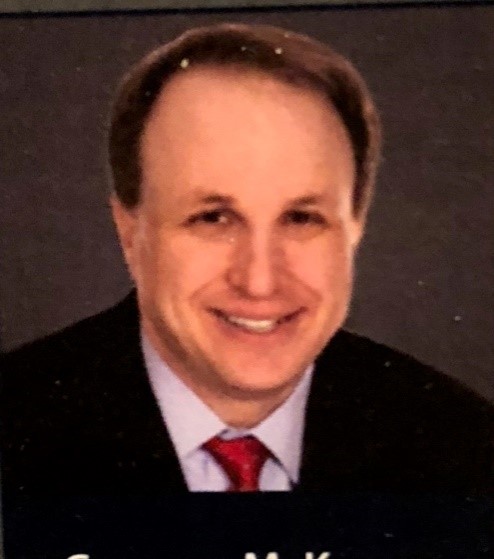
Gregory M. Krause
Miller, Canfield, Paddock & Stone, P.L.C.
150 W. Jefferson, Suite 2500
Detroit, MI 48226
krause@millercanfield.com
https://www.millercanfield.com/GregKrause
Greg Krause has an extensive litigation background and experience defending employers of all sizes against employment-related claims in state and federal courts and before state and federal anti-discrimination agencies. Greg’s practice also includes providing advice and counsel to employers with respect to policy issues and litigation avoidance matters.
Acosta v. Min & Kim, Inc., __F.3d__, 2019 WL 1234259 (6th Cir. March 18, 2019)
In Acosta v. Min & Kim, Inc., the Sixth Circuit found that employers, a Korean and Japanese restaurant and its owners, violated the overtime requirements of the Fair Labor Standard Act (FLSA). Here, regardless of the numbers of hours the employees actually worked and even if their overtime hours vary, as long as they worked six days, the employees are paid the same amount of “guaranteed wage” every week. The Sixth Circuit found that this pay practice violated the FLSA’s overtime requirement, because the “guarantee wage” did not include adequate overtime pay.
Moreover, the employers were also found to have violated the record-keeping requirements of the FLSA. Here, while having time and payroll records for the years 2013 to 2014 and 2016 to 2017, the employers had no records for the two missing years in between. In addition, some of the records for 2013 and 2014 contained only employees’ first name and their bi-weekly pay. Even though more detailed records existed, none of employers’ documents contained all the FLSA-required information for all employees. Most significantly, the employers’ failure to track employees’ hours at all until August 2016 violated the record-keeping requirements of the FLSA.
The Court then found that even though the employers’ records were lacking, the Department of Labor, based on the employers’ own records and testimony, had made a sufficient showing that the restaurant employees performed improperly uncompensated work and provided a reasonable estimate of the amount, which the employers did not offer any evidence to rebut. The Court also rejected the employers’ argument that they paid employees generously in compared to the minimum wage and no employee had complained as “beside the point.” The Court said, “Generosity is in the eye of the beholder, in this instance the eye of the employee, which is why compliance with the [FLSA] turns on dollars-and-cents calculations, not employee-satisfaction surveys.”
Having found that the employers violated the FLSA, the Sixth Circuit, however, found that the employers’ violations did not support an award of liquidated damages. The Court found that the employers here had adopted the prior owner’s pay practices when they purchased the restaurant. The employers also had actively sought to understand the FLSA’s requirements by consulting with and relying on their accountant about the guaranteed wage, as well as the minimum wage and overtime laws. Accordingly, the employers had reasonable, good faith basis that they were in compliance with the FLSA.
Am. Mun. Power, Inc. v. Nat’l Labor Relations Bd., 917 F.3d 904 (6th Cir. March 11, 2019)
In Am. Mun. Power, Inc. v. Nat’l Labor Relation Bd., the employer petitioned the Sixth Circuit after the National Labor Relation Board (NLRB) had denied the employer’s request for review to modify the definition of the collective bargaining unit, which included fulltime and regular part-time operators employed at the employer’s facility. The employer argued that the definition was flawed because it failed to exclude operators who were assigned to the facility on a temporary basis. While agreeing that the temporary assignees are not included in the bargaining unit, the union believed that the employer-proposed modifications would have unintended consequences. The NLRB agreed with the union and denied the employer’s request for review.
The Sixth Circuit denied the employer’s petition. The Court said that the NLRB is deputized with the power to determine “the unit appropriate for the purposes of collective bargaining.” Because this process involved “informed discretion,” the NLRB’s judgment was to be accorded deference, and the Court could only overturn the NLRB’s decision if it was arbitrary or constituted an abuse of discretion. Here, the Court found that the NLRB’s decision denying the employer’s request for a modification of the bargaining unit’s language was neither arbitrary nor an abuse of discretion. First, the definition by its terms did not include temporary assigned employees, making any amendment or modification unnecessary. Second, the employer did not have any plan to assign other employees to the facility on a temporary basis. Finally, the Court said that in the future, if a new situation arises that demand resolution and the union refuses to cooperate, the company can invoke the unit clarification process; but, at the moment, the employer had gotten the answer that it needed, i.e., a temporarily assigned operator sent to the facility would not be included in the bargaining unit.
Submitted by:
Nhan Ho, Esquire
Miller, Canfield, Paddock & Stone, P.L.C.
150 W. Jefferson Ave, Suite 2500
https://www.millercanfield.com/NhanHo
Nhan Ho is an associate in the Employment and Labor Group of Miller Canfield Paddock and Stone PLC. She focuses her practice on representing employers in litigations and arbitrations as well as consulting employers with compliance requirements and labor relations issues.
Acosta v. Off Duty Police Servs., Inc., No. 17-5995, 2019 WL 545124 (6th Cir. February 12, 2019)
The Department of Labor (DOL) brought action against a private security and traffic control services provider alleging that its workers were employees – not independent contractors as the company alleged – thus entitling them to overtime wages under the Fair Labor Standards Act (FLSA). The defendant’s workforce includes sworn officers, who also work for some law enforcement entities in addition to working for the defendant, and nonsworn officers, who have no background or day job in law enforcement. The nonsworn officers are paid less per hour, but they perform the same duties for the defendant’s customers as the sworn officers. The lower court found that the nonsworn officers were statutory employees entitled to overtime wages, but the sworn officers were independent contractors because they were not economically dependent upon their job with the defendant given that they were merely supplementing their main source of income.
On appeal, the Sixth Circuit reversed in part, ruling that all of the defendant’s workers are employees under the economic realities test regardless of their sworn status. The Court looked at each factor of the test, finding that the workers’ services are integral to the defendant’s business and that the low level of skill required to perform the job and the limited investment by the defendant’s workers in specialized equipment supports employee status for all workers. The Court ruled that the level of control the defendant exerts on all of its nonsworn employees clearly supported a finding that those workers were employees, but that the evidence did not readily favor either party’s position with respect to the sworn officers. As to permanency of the relationship, the Sixth Circuit disagreed with the lower court, ruling that whether a worker works for more than one company at a time is but one factor to consider in determining whether that worker is economically dependent upon the defendant company. By focusing only on the source of the workers’ income, the lower court failed to consider that in the modern economy workers must routinely seek out more than one source of income to make ends meet. In the case at hand, the workers’ consistent and relatively long relationship with the defendant company favored a finding of employee status. By balancing these factors, the Sixth Circuit ruled that all of the defendant’s workers were employees under the FLSA given the FLSA’s “strikingly broad” definition of “employee.”
An employee truck driver was issued a written warning for failing to properly secure his cargo in violation of the company’s policy. Prior to this written warning, the employee had filed several unfair labor practice (ULP) charges and had been disciplined for unrelated conduct shortly after filing each ULP charge. One of the ULP charges was in response to the employee’s supervisor changing disciplinary polices to eliminate verbal warnings, in which the employee alleged that the policy change was in retaliation to filing an earlier ULP charge. The employee filed a grievance disputing his written discipline for failing to properly secure his cargo, arguing that the written warning was excessive based on the employee’s violation of the company policy for the incident because it was not as severe as the employee’s supervisor led on and the supervisor’s claims regarding the incident were inconsistent. After the employee filed a charge with the Board, the ALJ concluded that a prima facie case of discriminatory animus had been shown and that the nondiscriminatory reasons for the discipline were “shifting and inconsistent” and therefore the company had violated § 8(a)(4) and (a)(1) of the NLRA. A divided panel of the Board agreed and adopted the ALJ’s order. The employer filed a petition for review and the General Counsel cross-applied for enforcement of the Board’s order.
On appeal, the Sixth Circuit affirmed using the Wright Line burden-shifting framework, holding that substantial evidence supported the NLRB’s conclusions. The Court found that the employee had engaged in protected activity and that the employer knew of the protected activity given that the employee filed two charges in the months leading up to his written warning and the employer provided an affidavit regarding one of the charges. The Court agreed with the ALJ and Board that there was evidence that the employer acted as it did on the basis of anti-union animus given the supervisor’s lack of credibility regarding the cargo incident, the fact that the employee received his written warning under one month after he filed a ULP charge with the Board, and the difference in treatment other employees received who had similar violations but were issued lesser discipline. Finally, the Court ruled that the employer could not show that it would have made the same employment decision regardless of the employee’s protected activity given that the supervisor’s actions in issuing the discipline were not calculated to rectify a safety problem and that his testimony about the level of safety concern posed was not credible.
Submitted by:

Jacob M. Hogg
Miller, Canfield, Paddock & Stone, P.L.C.
150 W. Jefferson, Suite 2500
An associate at Miller Canfield, Jacob Hogg works with the Employment and Labor Group assisting with litigation and arbitration, internal compliance requirements for employers and representing various clients in labor relations and immigration issues.
Eighth Circuit
Bryant v. Jeffrey Sand Co., 18-2297, 2019 WL 1233052 (8th Cir. March 18, 2019)
From 2009 to 2013, Adrian Bryant worked as a deckhand for Jeffrey Sand on the Cora, a barge that dredges sand from the Arkansas River. During this period, Bryant was the only black employee on the barge. The evidence at trial revealed that Bryant’s direct supervisor, Jeffrey Skaggs engaged in a consistent pattern of racially-motivated abuse. Skaggs yelled explicit racial slurs at Bryant. Skaggs would also give Bryant difficult tasks that he would not assign other white employees. A co-worker testified that “a number of times,” Skaggs would “get up in Bryant’s face and use his chest to push Bryant around trying to get Bryant to fight Skaggs.”
Bryant twice complained to his plant manager, Ken Bolton, and to the then-president of the company, Joe Wickliffe, four times regarding Skagg’s behavior. Bolton never interviewed Bryant or other employees. Jeffrey Sand has no written anti-harassment or anti-discrimination policy and no human resources personnel.
Bryant testified that the harassment persisted and that he continued to make complaints after May 2012. Specifically, in August 2012, Skaggs made him paint rails in the hot sun and would not allow him to come into the air-conditioned part of the barge or access water. When Bryant said he felt ill, Skaggs responded, “Go out there and paint those rails like I told your black ass to.” Bryant began to experience chest pains and felt lightheaded, another employee called an ambulance and it was later determined that Bryant suffered a heart attack and did not return for two weeks.
Later, Clay McGeorge, received an anonymous email complaining of hearing racist comments on the Cora. Clay brought this information to Bolton, who began an investigation. Upon investigating, other employees told Bolton that they heard second-hand about Skaggs using racial slurs. However, Bolton did not interview Bryant as part of his investigation and the company took no disciplinary action against Skaggs.
Shortly after the investigation into the email, Jeffrey Sand fired Bryant for absenteeism. Bryant brought a suit under 42 U.S.C. § 1981, alleging a racially hostile work environment and retaliatory termination. The district court granted summary judgment in favor of Jeffrey Sand on the retaliation claim but allowed the hostile-work-environment claim to proceed to trial. The jury found for Bryant and awarded him $1.00 in compensatory damages and $250,000 in punitive damages. The district court denied Jeffrey Sand’s post-trial motions for judgment as a matter of law and to amend of punitive damages. The court granted Bryant’s motion for attorney’s fees and costs. Jeffrey Sand appeals.
Jeffrey Sand argued it was entitled to judgment as a matter of law because there was insufficient evidence to charge punitive damages to the jury. The Eighth Circuit disagreed by holding that the award of punitive damages is supported by the record. Bryant repeatedly complained to supervisors about racial slurs and those supervisors never interviewed Bryant in response to his complaints. Additionally, Jeffrey Sand never disciplined Skaggs or tried to prevent further harassment.
Subsequently, the Eighth Circuit concluded that the jury could have reasonably concluded from these facts that Jeffrey Sand exhibited reckless indifference to Bryant’s rights because, these facts, viewed in Bryant’s favor, show that Jeffrey Sand’s actions were “so reprehensible as to warrant the imposition of further sanctions to achieve punishment or deterrence.” Specifically, Skaggs’s verbal and physical abuse went unchecked even after another employee corroborated Bryant’s allegations, and even placed Bryant at risk of serious injury. As a result, the Eighth Circuit affirmed the judgment of the district court.
Submitted by:

Frances E. Baillon is a recognized advocate for those who have been victimized by the unfair and illegal practices of employers. She currently serves as Vice President of the Minnesota Chapter of the National Employment Lawyers Association, as well as chair of its Amicus Committee, and is a member of the MSBA’s Civil Jury Instruction Committee on Employment Law.
Ted McGee
Law Clerk, Baillon Thome Jozwiak & Wanta LLP
University of Minnesota School of Law
Juris Doctorate Candidate, May 2019
D.C. Circuit
University of Southern California v. National Labor Relations Board, 2019 WL 1119372, ___ F.3d ___ (D.C. Cir. March 12, 2019)
In University of Southern California v. National Labor Relations Board, the D.C. Circuit reviewed the application of the NLRB’s standard for determining when faculty members at private universities are managerial employees who are not entitled to the protections of the National Labor Relations Act. While the court affirmed the NLRB’s test in many respects, it invalidated another aspect of the NLRB’s ruling as inconsistent with the U.S. Supreme Court’s NLRB v. Yeshiva University, 444 U.S. 672 (1980), decision.
In Yeshiva, the Supreme Court distinguished between the “pyramidal” management-employee relations in private industry and the collegial management structure of the university. The Court held that where faculty exercised influence over the university’s management through various committees, they were managerial employees not covered by the NLRA. In doing so, however, the Court noted that there could be subclasses of faculty who are not managerial employees.
In University of Southern California, a union sought to represent full and part time non-tenure-track faculty. The university contested the union’s ability to represent these employees, arguing that the employees were managerial. The NLRB applied a test where it looked to the influence of faculty committees over five areas of university decision-making: academic programs, enrollment management policies, finances, academic policies, and personnel policies and decisions. The NLRB looked to whether the faculty exercised actual control or effective recommendation authority in these areas, requiring that faculty recommendations be “almost always” followed by the administration without independent review. The NLRB also imposed a bright-line, majority status rule under which the class of faculty at issue must constitute a majority of the committee.
The D.C. Circuit upheld all of the challenged aspects of the NLRB’s standard except the majority status rule, finding it inconsistent with the prior Yeshiva decision. The court held that Yeshiva required consideration of the authority of the faculty as a whole, not that of individual professors or subgroups. The court noted that even if faculty subgroups have different statuses within the university, they may share common interests. While the status of the subgroup itself could become relevant if the subgroup’s interests fundamentally diverge from those of the majority of the faculty, the court required that the NLRB separate its analysis into two distinct inquiries: first, whether any faculty body as a whole exercises effective control and, if so, whether based on the interests of different groups the subgroup in question is included in that managerial faculty body.
Novato Healthcare Center v. National Labor Relations Board, 916 F.3d 1095 (D.C. Cir. March 5, 2019)
In Novato Healthcare Center v. National Labor Relations Board, an employer unsuccessfully challenged the NLRB’s finding that it had engaged in an unfair labor practice by terminating 5 employees in the lead up to a contested union election. Four of the employees in question had been active pro-union campaigners. A supervisor claimed that she saw the employees, who were nurses, sleeping from about 4:00am to 4:21am while on a night shift. The employees were permitted to sleep only during 10 minute breaks while another employee was on-duty. Based on the supervisor’s report, the employer terminated the employment of the four pro-union employees. It also terminated a fifth employee, whose union views were unknown, in order to attempt to strengthen the decision to terminate the pro-union employees. While the 4:21am end time was verified by the date stamp on a photograph the supervisor took, the court upheld the NLRB’s finding that the supervisor’s claim to have seen the employees sleeping at 4:00am was not credible. The court noted this finding was based on the supervisor’s testimony that the only time that she had seen a clock during the sequence in question was when she stopped at a stop sign 3 blocks from work and noticed it was 3:50am. The court noted that the supervisor had claimed that between that point and when she first saw the employees sleeping, she testified that she had engaged in numerous activities, including, driving the 3 blocks to the facility, parking and entering the facility, logging into a computer and checking e-mail, inspecting a refrigerator and freezer, using the restroom, collecting election flyers from a break room, reading the flyers, and walking around the facility. The D.C. Circuit upheld the NLRB’s finding that it was simply implausible for the supervisor to have performed all of these activities in 10 minutes.
Submitted by:

Jack Blum is an associate in the Employment Disputes, Litigation and Arbitration practice at the Washington, D.C. office of Polsinelli, P.C. Mr. Blum represents employers in connection with claims of discrimination, wage and hour issues, the interpretation of employment agreements, the enforcement of restrictive covenants, and misappropriation of trade secrets.